

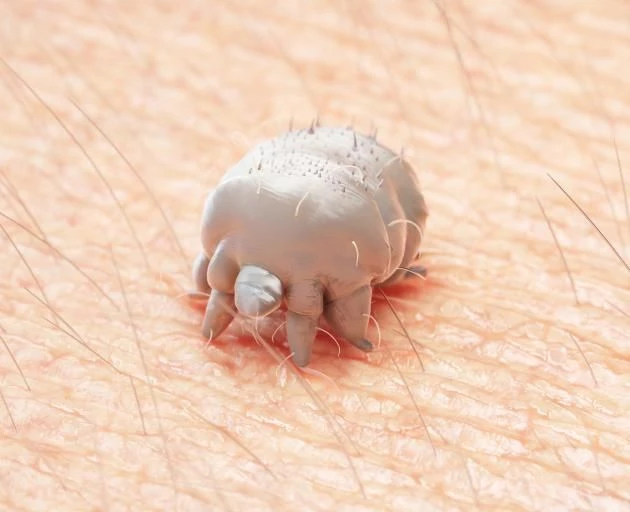
While exploring Vietnam is incredible, shared accommodations can sometimes lead to scabies. This highly contagious skin infection is not caused by poor hygiene and requires prescription-strength treatment, not over-the-counter lotions. If you have an intense itch that worsens at night, Hoa Duc Clinic offers quick diagnosis and effective treatment to help you resume your journey in comfort.
What Is Scabies and How Does It Spread?
Scabies is a skin condition caused by microscopic mites (Sarcoptes scabiei) invisible to the naked eye. The female mite burrows into your outer skin layer to live and lay eggs. The intense itching you feel is an allergic reaction to the mites, their saliva, and their waste.
Because these mites cannot jump or fly, scabies spreads through direct, prolonged skin-to-skin contact. While traveling, this often happens via:
- Shared Sleeping Quarters: Using unwashed bedding in crowded hostels, sleeper buses, or trains.
- Close Social Contact: Sustained close contact with someone who has the mites.
- Contaminated Items: Sharing infested clothing, towels, or bedding. While mites only survive off a human host for 2–3 days, this remains a risk in high-density settings.
How to Identify Scabies on Your Skin
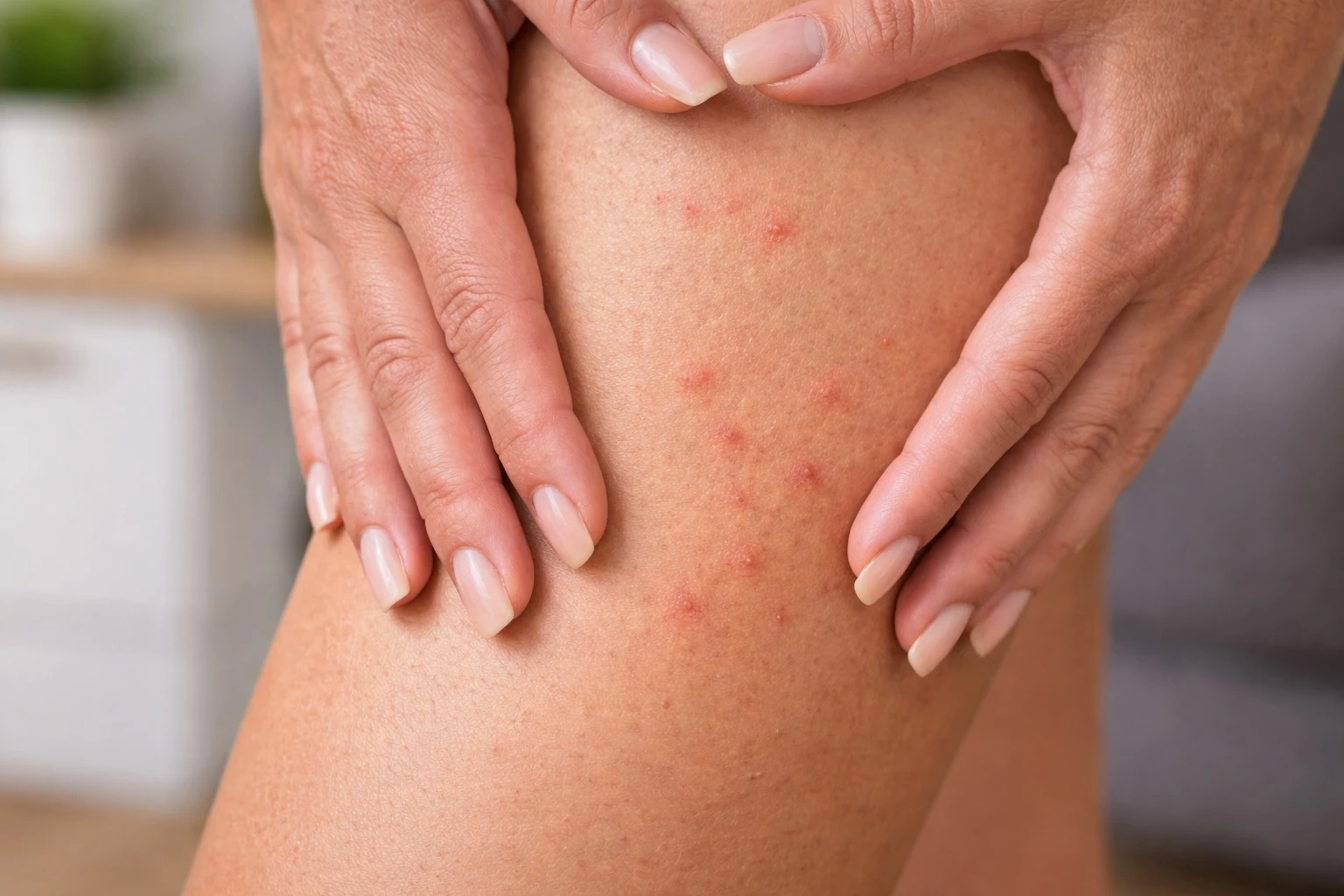
Catching scabies early helps stop it from spreading and gets you relief faster. Keep an eye out for these common signs:
Intense itching that worsens at night
The main sign of scabies is intense, relentless itching. It may occur during the day but worsens significantly at night. This happens because your body temperature rises under the covers, which warms the skin and causes the mites to become more active. The severe nighttime discomfort can disrupt your sleep and cause exhaustion.
Small burrows between fingers and on wrists
Look for burrows, which are tiny, thread-like lines (2–15mm long) that are skin-colored or greyish-white. You will typically find these in warm skin folds, such as between your fingers, on your wrists, around your elbows, under your armpits, or along your beltline.
Rash spreading to trunk and limbs
An allergic reaction to the mites triggers a widespread rash. This typically appears as clusters of small red bumps or tiny fluid-filled blisters on the stomach, chest, back, and limbs. Because the itching is so severe, scratching can easily break the skin, leading to a high risk of secondary bacterial infections like impetigo or cellulitis.
Scabies Diagnosis and Cream Treatment at Hoa Duc Clinic

If you suspect you have scabies, get professional care at Hoa Duc clinic, located at 04–06–08 Dinh Cong Trang, Quy Nhơn.
Important: Avoid using over-the-counter anti-itch or steroid creams from local pharmacies. These can mask symptoms while allowing mites to spread further.
At Hoa Duc, our specialized team offers a streamlined, effective recovery plan:
- Quick Diagnosis: Our on-site lab performs a simple, painless skin scraping to confirm the presence of mites under a microscope, ensuring you receive the correct treatment.
- Effective Treatment: We prescribe international-standard 5% Permethrin cream. Our doctors provide clear, step-by-step instructions on applying the cream from neck to feet for 8–14 hours, with a follow-up application a week later to stop the cycle.
- Preventing Re-infestation: We guide you on cleaning your clothes and bedding properly so you stay clear of mites.
- Symptom Relief: We provide non-drowsy antihistamines and, if needed, antibiotics for scratch-related infections to keep you comfortable during your recovery.
Our entirely centralized facility ensures your medical evaluation, laboratory screening, and pharmacy prescription collection happen smoothly inside a single building, saving your energy so you can focus entirely on your recovery.
Conclusion
Scabies can be exhausting, but a fast, professional diagnosis eliminates all guesswork. If you need a definitive scabies check in Quy Nhon, let the expert team at Hoa Duc Clinic deliver the clear communication and expert treatment you deserve. We will clear the infestation permanently so you can resume your journey with complete peace of mind.
Contact us now to schedule your consultation!
Frequently Asked Questions (FAQ)
1. How long does it take for scabies symptoms to appear after exposure?
If you have never had scabies before, it can take 4 to 6 weeks for your immune system to develop an allergic reaction and start itching. However, you can still spread the mites to others during this asymptomatic incubation window. If you have had scabies in the past, symptoms typically start within 1 to 4 days of re-exposure.
2. Does my travel companion need to be treated if they aren’t itching?
Yes, absolutely. Because symptoms take several weeks to appear during a first-time infestation, anyone who has had close skin-to-skin contact or shared a bed with an infested person must be treated at the exact same time, even if they show no signs of itching or rash. This is critical to prevent passing the mites back and forth.
3. Why do I still feel itchy after completing the full scabies treatment?
It is incredibly common to experience “post-scabietic itch” for 2 to 4 weeks after the mites have been completely killed. This occurs because the dead mites, eggs, and waste materials remain trapped inside the outer layers of your skin, and your body continues to react to them until the skin naturally exfoliates and renews itself.
4. What is the standard treatment for scabies in Vietnam?
The premier treatment option is 5% permethrin cream, which is applied across the entire body from the neck down. It should remain on the skin for 8 to 14 hours before being washed off, and the application must be repeated after one week. You can obtain a prescription for this medication from a doctor at Hoa Duc Clinic.
5. Do I need to schedule an advance appointment to have my rash checked?
No, walk-in patients struggling with intense, disruptive skin irritation are always welcome at our clinic at 04–06–08 Dinh Cong Trang. Our triage team will handle your registration efficiently using English documentation and direct you to an available medical specialist quickly.