
If you are dealing with raw, peeling, or persistently itchy skin, the medical team at Hoa Duc Clinic is here to help. We provide fast, accurate diagnoses and high-quality antifungal therapies to quickly restore your health so you can travel in comfort.
Why Fungal Infections Spread Quickly in Vietnam
Microscopic fungi (like yeasts and mold-like organisms) naturally live on our skin and in the environment without causing harm. However, the tropical climate of Vietnam provides the perfect conditions for them to multiply rapidly into an uncomfortable infection:
- High Heat and Humidity: Fungi thrive in warm, damp places. Because the air is so humid, sweat cannot evaporate properly, leaving your skin continuously moist.
- Prolonged Skin Friction: Long hours of walking, trekking, or sitting during travel cause your clothes or skin to rub together. This friction creates tiny, microscopic tears in your damp skin, allowing fungal spores to burrow deep inside.
- Tight Travel Gear: Wearing heavy hiking boots, tight synthetic clothes, or sitting in wet swimwear after the beach traps body heat and moisture directly against your skin, which significantly accelerates fungal growth.
- Shared Environments: High-traffic tourist spots—like hostel showers, pool decks, and rented helmets or fitness mats—can harbor tough fungal spores that easily transfer to your skin when your body is tired from travel.
Types of Fungal Infections Seen in Travellers
Dermatophytes are a specific type of fungi that survive by feeding on keratin, the tough, dead protein that makes up your outer skin layer, hair, and nails. Depending on where these fungi settle on your body, they cause distinct medical conditions:
Tinea pedis (athlete’s foot)
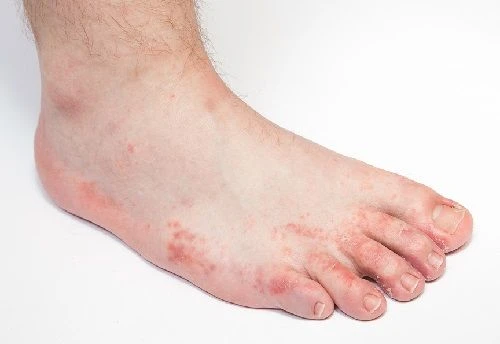
Athlete’s foot is the most common fungal skin infection, affecting roughly 70% of people in their lifetime due to a fungus that thrives in the warm, sweaty skin between the toes and on the soles of the feet. In a hot, humid climate, wearing tight, closed shoes or walking barefoot in shared hostel showers and pool areas creates the perfect environment for this highly contagious fungus to spread.
It causes intensely itchy, flaky, or thickened skin, appearing red on lighter skin and as darker patches on brown or black skin, along with painful cracks or small blisters. If you notice these symptoms, it is important to avoid scratching to prevent transferring the infection to other parts of your body, and visit Hoa Duc Clinic for a rapid diagnosis and targeted antifungal treatment.
Tinea corporis (ringworm on body)
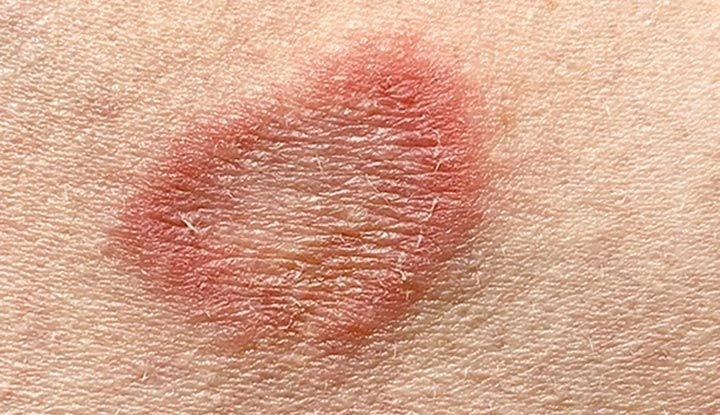
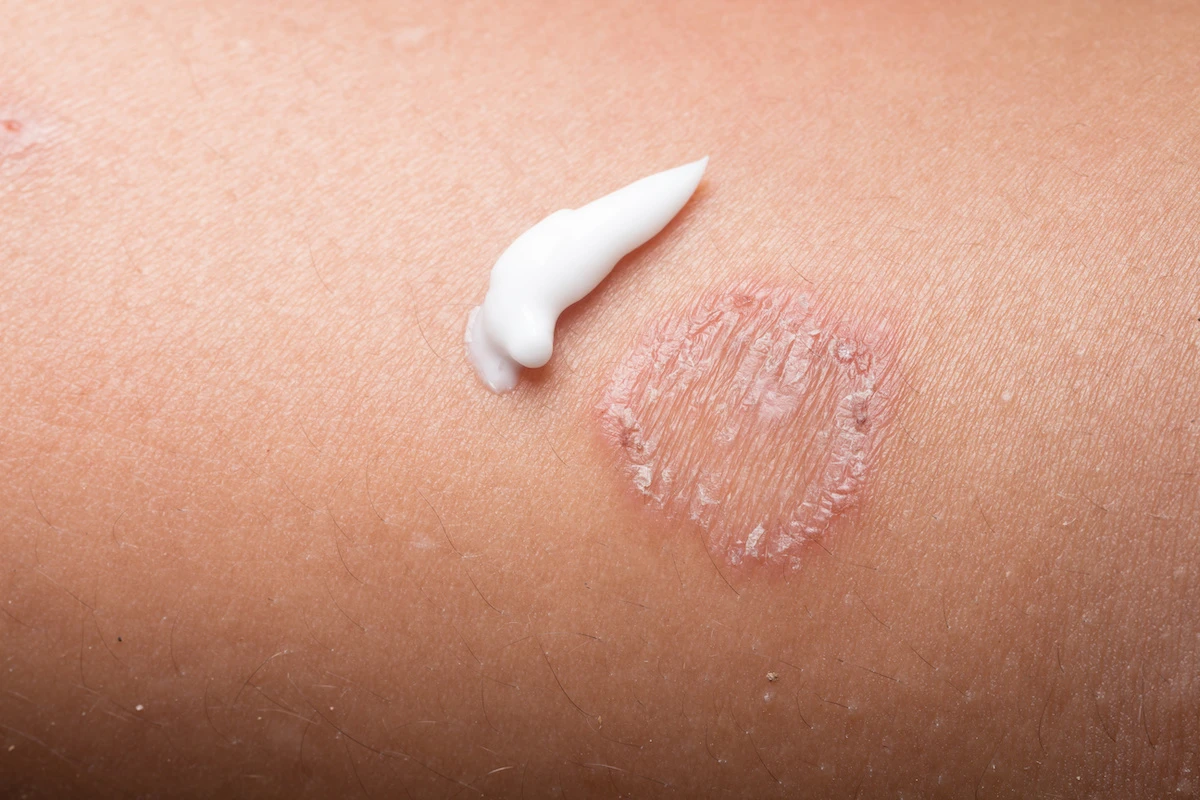
Despite its common name, ringworm has absolutely nothing to do with worms; it is a superficial fungal infection that can appear anywhere on your trunk, arms, or legs. It presents as an itchy, circular or oval-shaped rash with a raised, scaly red border that gradually expands outward while the center appears to clear up. As you scratch the itchy border, you risk spreading the fungal spores to other patches of your body or introducing bacteria from your fingernails into the open skin.
Tinea cruris (groin fungal infection)
Commonly referred to as “jock itch,” tinea cruris affects the groin, inner thighs, and buttocks. It manifests as a symmetrical, raised, scaly red rash that triggers an intense, burning itch. This infection thrives in the groin area because the natural folds of the body trap sweat and heat, creating a perfect incubation zone. It is especially prevalent among active travelers who walk long distances in humid weather while wearing tight or unbreathable underwear.
Antifungal Treatment at Hoa Duc Clinic, Quy Nhon
To successfully clear a fungal skin infection, you will typically need to use targeted antifungal medications. At Hoa Duc Clinic, our medical team provides precise, physician-led treatment plans using two main types of antifungal therapies:
1. Topical Antifungals (Creams, Lotions, and Shampoos)
Most localized fungal skin infections respond well to treatments applied directly to the affected area.
- Common Medications: These include effective antifungals such as terbinafine, clotrimazole, and miconazole.
- Crucial Care Note: To prevent the infection from returning, you must continue applying the topical treatment for one to two weeks after your visible symptoms have completely cleared. For fungal nail infections, topical treatments may need to be applied consistently for up to a year.
2. Oral Antifungal Tablets
For more severe or deeply rooted cases, topical creams alone may not be enough. Our doctors may prescribe oral antifungal tablets if:
- The infection covers a large area of your body.
- The fungus has infected your scalp or nails.
- Previous over-the-counter topical treatments have failed to clear the rash.
Oral medications, such as terbinafine, itraconazole, or griseofulvin, must be taken for several weeks to fully eradicate the fungus. For deep nail infections, this course can last up to 6 months. It is vital to strictly follow the specific dosage instructions provided by your Hoa Duc Clinic physician.
Conclusion
A fungal infection can quickly turn a beautiful trip into a miserable, itchy ordeal. If you are struggling with a stubborn, scaling, or burning rash in Vietnam, let the dedicated medical team at Hoa Duc Clinic deliver the expert diagnosis and targeted treatment you deserve.
Contact us now to schedule your consultation!
Frequently Asked Questions (FAQ)
1. How long does a fungal skin infection take to clear up with treatment?
Most superficial infections show noticeable improvement within 48 to 72 hours of starting targeted medical creams. However, you must continue the medication for one to two weeks after the rash disappears to ensure all microscopic spores are completely eradicated.
2. Is a fungal skin infection contagious to my travel companion?
Yes, fungal infections are highly contagious. They easily spread to your travel partner through direct skin-to-skin contact or by sharing items like towels, bed linens, clothing, and rented motorbike gear.
3. Can I still go swimming if I have ringworm or athlete’s foot?
Avoid public swimming pools and communal hot tubs to prevent spreading the spores to others. While swimming in the ocean is fine, you must dry your skin thoroughly immediately afterward, as residual dampness will cause the fungus to grow.
4. Do I need an advance appointment to have an itchy rash evaluated?
No, you can walk directly into our clinic at 04-06-08 Dinh Cong Trang during our regular hours. Severe or highly uncomfortable skin irritations are assessed quickly by our triage staff to connect you with an available physician without long delays.
Editor: Le Hong Hanh Nguyen