
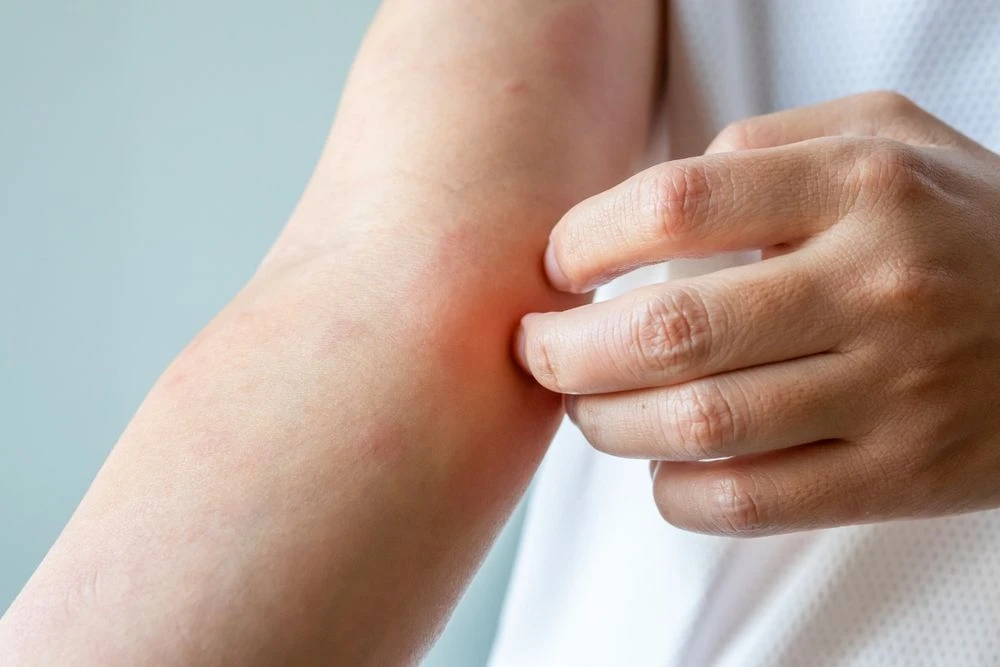
If you are dealing with an inflamed, weeping, or painful breakout in Quy Nhon, the medical team at Hoa Duc Clinic is here to help. We provide rapid testing and expert treatments to eliminate foreign bacteria and fungi, restoring your health so you can continue your journey in comfort.
Why the Tropics Are Harder on Your Skin
Your skin functions as a dynamic, protective barrier that repels environmental pathogens. However, the hot and humid climate of Vietnam alters this ecosystem in several distinct ways:
- Constant Moisture: Persistent sweating softens the skin’s outermost layer (the stratum corneum) through a process called maceration. This prolonged dampness breaks down the tight structural links between skin cells, creating microscopic entry points for ambient microbes.
- Optimal Breeding Grounds: High ambient temperatures and humidity provide perfect conditions for bacteria and fungi to proliferate exponentially on skin surfaces, hotel bedding, and rented motorbike gear.
- Altered Skin Acidity: Normal skin maintains a slightly acidic pH that naturally repels harmful pathogens. Heavy sweating shifts this balance toward a neutral or alkaline state, temporarily disabling the skin’s built-in antimicrobial defenses.
- Frequent Minor Trauma: Outdoor adventures—such as hiking through brush, riding motorbikes, or swimming near coral reefs—expose you to constant minor abrasions, sandfly bites, and small cuts that can quickly become infected in tropical environments.
Most Common Tropical Skin Infections in Vietnam
When your skin is scratched or weakened, bacteria and fungi that thrive in hot climates can easily move in and cause an infection. Catching these signs early stops the infection from spreading deeper into your tissue.
Folliculitis (infected hair follicles)
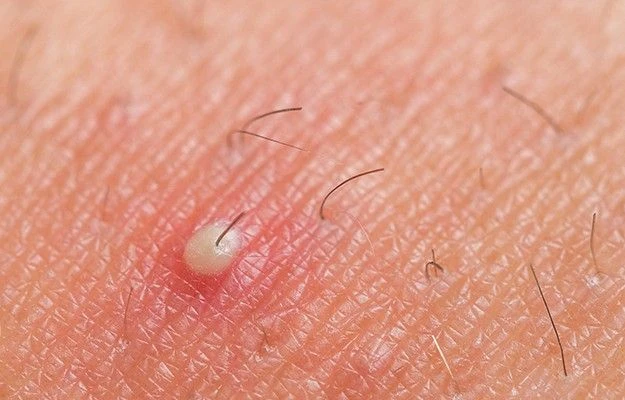
Folliculitis looks like clusters of small, red, itchy bumps or pus-filled pimples around your hair follicles (where hair grows out of your skin). In hot climates, this usually happens when tight, sweaty clothes rub against your skin, or when heavy sunscreens block your pores, allowing bacteria to multiply.
If you leave it untreated, these simple bumps can turn into deep, painful boils that a doctor may need to cut open and drain.
Cellulitis from minor cuts
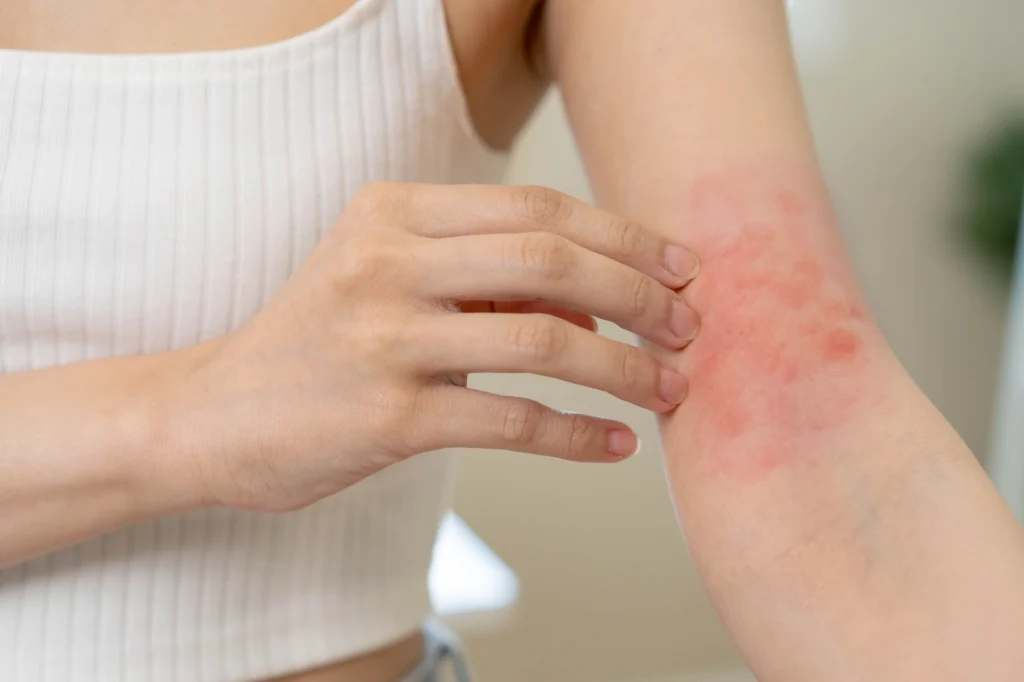
Cellulitis is a deep bacterial skin infection that typically strikes after a seemingly minor injury, such as an insect bite, a small scrape from a beach walk, or a superficial coral scratch. The area rapidly becomes intensely red, swollen, hot to the touch, and highly tender, with the redness expanding outward over a matter of hours.
At Hoa Duc Clinic, we monitor cellulitis closely because it can quickly enter the bloodstream if not treated with targeted prescription antibiotics.
Fungal overlap in humid conditions
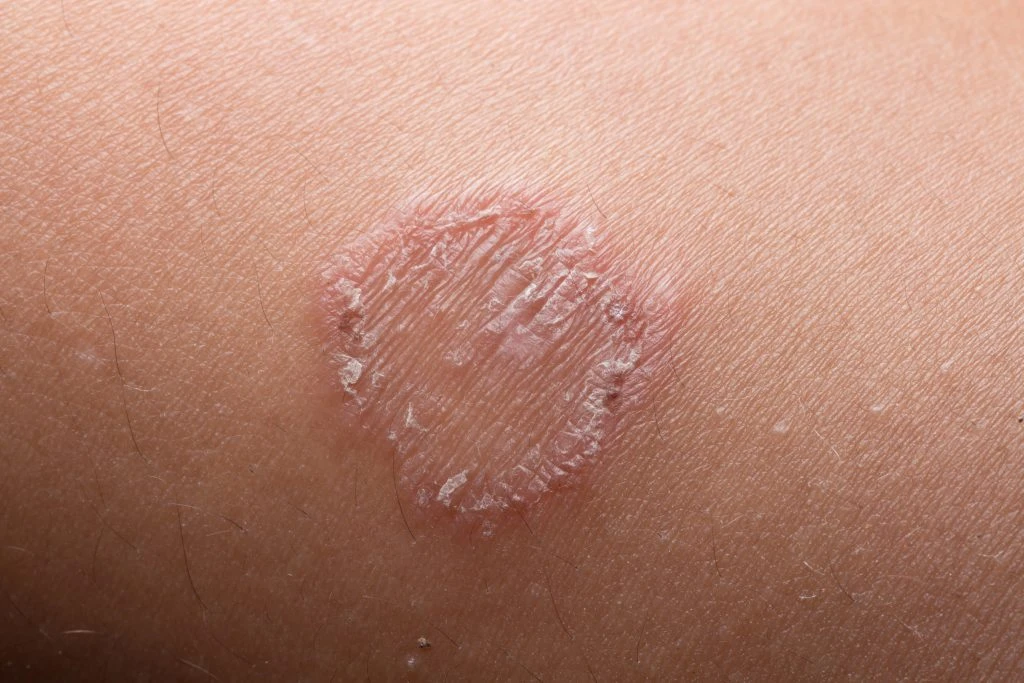
The constant moisture of a tropical climate heavily encourages fungal overgrowth, such as ringworm (tinea corporis), athlete’s foot (tinea pedis), or jock itch (tinea cruris). These infections cause circular, red, scaly patches that itch intensely.
What makes tropical cases challenging is “fungal overlap”, scratching an itchy fungal infection that introduces aggressive bacteria from your fingernails into the broken skin, creating a complex, dual-pathogen infection that requires multiple classes of medication to resolve.
Diagnosis and Treatment at Hoa Duc Clinic, Quy Nhon
If you notice a skin lesion that is spreading, throbbing, or producing fluid, you can access reliable, expert medical care at Hoa Duc Clinic.
Clinical Warning: Never attempt to self-treat an undiagnosed tropical rash using over-the-counter creams that contain strong steroids. If your skin issue is actually caused by a fungus or bacteria, steroids will temporarily hide the redness while actively lowering your skin’s local immunity. This allows the infection to burrow deeper and grow much worse.
When you consult with our English-speaking doctors for a suspected tropical skin infection, we implement a strict care protocol to get you well:
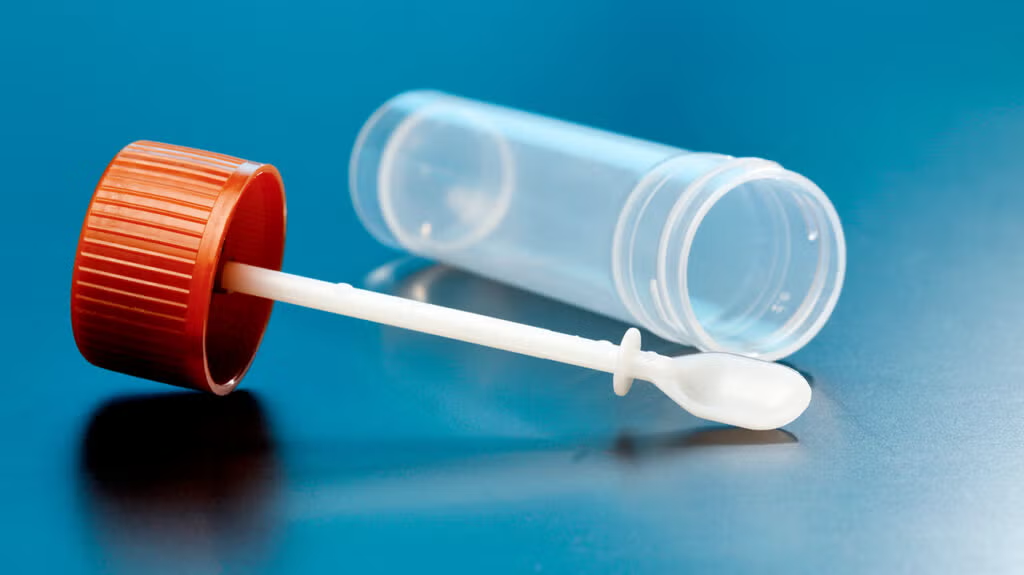
- Microbial Identification: We carefully examine the pattern of your rash. If necessary, we perform quick, on-site skin scrapings or wound swabs to accurately identify whether your infection is bacterial, viral, or fungal.
- Targeted Medical Prescriptions: Based on our laboratory findings, we provide precise prescriptions for high-quality, international-grade topical creams, oral antibiotics, or specialized antifungal medications.
- Professional Wound Care: Our clinical team will thoroughly clean and dress infected wounds using sterile, medical-grade materials. We will also give you a clear, easy guide on how to keep the area protected while you continue traveling.
Our fully centralized facility ensures that your medical check-up, lab tests, and prescription collection all happen smoothly under one roof, allowing you to begin your recovery immediately.
Conclusion
Tropical conditions can be tough on your skin, but a small scratch shouldn’t ruin your trip. If you are struggling with a painful tropical skin infection, the dedicated team at Hoa Duc Clinic is here to help. We provide the clear communication and expert treatment needed to clear the infection so you can safely continue your adventure.
Contact us now to schedule your consultation!
Frequently Asked Questions (FAQ)
1. Why do small insect bites turn into large sores so quickly in Vietnam?
The high humidity increases the bacterial load on your skin, while the itchiness of a tropical bite prompts frequent scratching. Scratching tears the skin open, driving standard skin bacteria (Staphylococcus or Streptococcus) deep into the tissue, creating a secondary infection.
2. Can I swim in the ocean if I have an active skin infection?
No, you must avoid swimming entirely until your skin is completely closed and healed. Ocean water can introduce unique marine pathogens (like Vibrio species) into open wounds, which can cause rapidly expanding, dangerous infections in a tropical climate.
3. How long does a bacterial skin infection take to improve with antibiotics?
With the correct, targeted antibiotic therapy prescribed by our doctors, you will typically notice a decrease in pain, heat, and swelling within 24 to 48 hours. However, you must finish the entire medication course exactly as prescribed to ensure the infection does not return.
4. Can I use over-the-counter antibiotic cream for a tropical skin infection?
You can try for very mild folliculitis. But if the redness spreads, you have a fever, or the area becomes hot and swollen, see a doctor. Cellulitis needs oral or IV antibiotics – cream alone is not enough.
5. How do I know if my rash is fungal or bacterial?
Fungal rashes are often ring-shaped, very itchy, and have a clear centre. Bacterial infections are more likely to be painful, red, swollen, and warm. The doctor at Hoa Duc Clinic can tell you with a quick examination.
Editor: Le Hong Hanh Nguyen